
Advancing a pipeline of purpose-built biologics.
We identified biological targets with significant clinical validation, but where others had struggled to build fully optimized drugs. The result? A pipeline that directly addresses patient needs in obesity and cardiometabolic disease.
Our wholly-owned pipeline
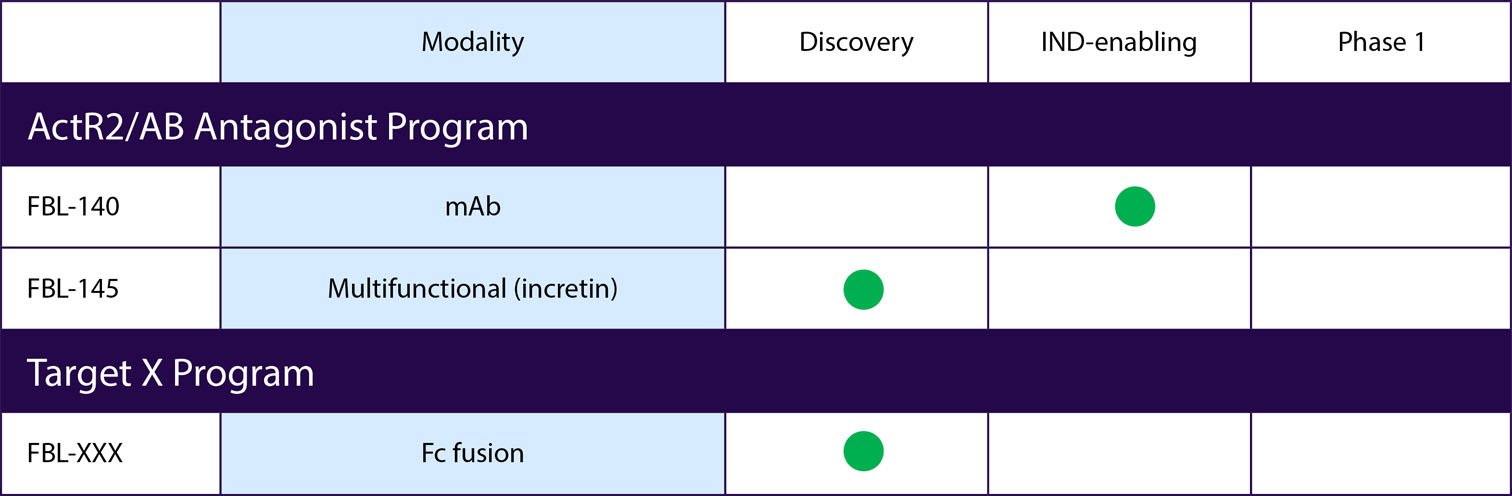
Our best-in-class Activin Receptor 2 franchise.
Our lead program is FBL-140, an ActR2A/B antagonist mAb that addresses the needs of the large population of patients for whom incretin therapies leave key gaps — persistent visceral fat, inadequate weight loss response, lean mass loss and incomplete restoration of metabolic health — representing hundreds of millions of patients globally and tens of millions in the US alone.
Preclinical, pharmacokinetic, and early manufacturability data show that FBL-140 is highly efficacious and optimized for low cost of goods and dose flexibility including monthly or quarterly subcutaneous options, as a single agent or in combination with standard of care therapies. FBL-140 is expected to enter first-in-human studies in 1Q 2027.
Incretin therapies leave key gaps
Persistent visceral fat
Variable weight loss response
Lean mass loss
Incomplete restoration of metabolic health


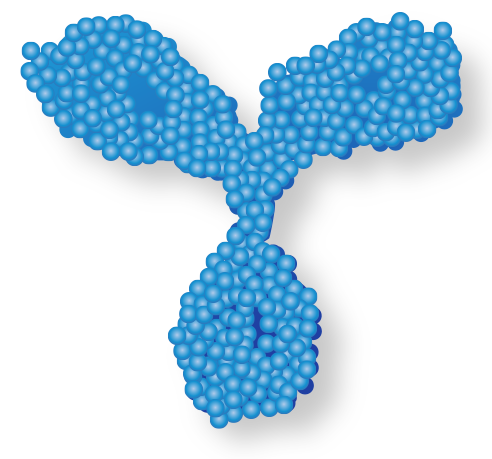
FBL-140
ActR2A/B antagonist mAb
FBL-140 is designed to deliver more
Reduces visceral fat
Robust weight loss response
Preserves lean mass
Drives metabolic remodeling
Building category leadership position.
FBL-140 forms the foundation of a category-leading franchise of therapeutic candidates that address the need for healthy body composition in obesity and cardiometabolic diseases.
We are also advancing an all-in-one multifunctional pairing ActR2A/B antagonism with an incretin mimetic.
A timeline of firsts.
Our team is at the forefront of applying artificial intelligence to protein design. Here are seminal publications from the past decade.
Building upon our FBL-140 foundation to additional:
Obesity segments

Addressing diverse patient needs across the obesity spectrum
Indications

Expanding impact into cardiometabolic and related diseases
Formats
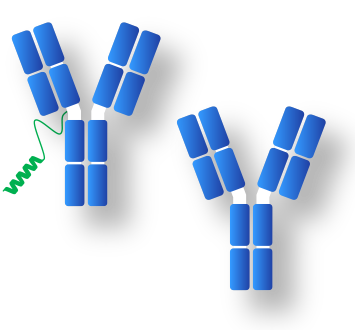
Delivering differentiated molecular formats to optimize biology and broaden potential
Targets

Pursuing novel biology to unlock next-generation therapies

Alanine Parallax
“The pace of progress in the
field is astounding.
At Fable, we remain at
the forefront of advancing
cutting-edge methods,
models, and tools.”

Setting our
platform apart.
Our 7 key differentiators drive precise protein design, seamlessly integrating binding and developability criteria into lead candidates.
“Powering an ML platform
to deliver better medicines
requires an unrelenting
focus at the bench to
continuously generate data
of the highest quality.”

We've assembled a team with diverse and specialized skill sets, uniquely equipping us to explore the fast-paced world of protein design and drive forward new possibilities in medicine.
Arginine Parallax